Is It Legal to Drive with Your Interior Lights On?

Or Was Your Mom Just Lying to You?

Author profile picture
Susan Meyer
Senior Editorial Manager

Susan is a licensed insurance agent and has worked as a writer and editor for over 10 years across a number of industries. She has worked at The Zebr…

Credentials
  • Licensed Insurance Agent — Property and Casualty
Author profile picture
Beth Swanson
Insurance Analyst

Beth joined The Zebra in 2022 as an Associate Content Strategist. A licensed insurance agent, she specializes in creating clear, accessible content t…

Credentials
  • Licensed Insurance Agent — Property and Casualty
  • Associate in Insurance (AINS)
  • Professional Risk Consultant (PRC)
  • Associate in Insurance Services (AIS)

Turn It Off!

When you were a kid, riding in the back seat at night, you likely remember a parent frantically yelling, "Turn that light off! It’s illegal!" the moment you flicked on the overhead dome light.

For decades, this warning has been passed down like a piece of sacred highway law. But is this really a law in any state or just a rumor created by parents who don’t want the distraction? 

Here’s the truth about the legality of driving with your dome light on, why you actually shouldn't do it, and how it could still land you a ticket...or insurance consequences.

Is It Actually Illegal?

The short answer is no. There is no federal law, nor is there a specific state statute in any of the 50 U.S. states, that explicitly makes it illegal to drive with your interior dome or map lights turned on.[1]

The "dome light ban" is a classic urban legend. Parents likely continued the ruse because explaining the nuances of night blindness, windshield glare, and the annoyance of being illuminated for all passing motorists to see is much harder than simply stating, "We will get arrested."

The Safety Risks of Driving with Interior Lights On

While it isn't a crime, driving with an interior light on—especially at night—is highly discouraged by highway safety experts. Driving at night is already more dangerous due to reduced visibility, tired drivers, and more chance of intoxicated drivers. In fact, while only 25% of driving takes place at night, 50% of fatal car crashes happen when the sun goes down.[2]


Here’s why lighting up your car’s interior is a problem:

1. Reduced Night Vision

When you drive in the dark, your pupils dilate to let in as much ambient light as possible, allowing you to see the road, pedestrians, and obstacles clearly. Turning on a bright overhead light causes your pupils to rapidly constrict. This severely compromises your night vision, making the world outside your windows appear much darker and harder to see. 

2. Dashboard and Window Glare

Glass is highly reflective. When the inside of your vehicle is brighter than the outside, the interior light reflects off the windshield and side windows. This creates a mirror-like glare that distorts your depth perception and can obscure oncoming headlights or road signs.

3. It Signals Distraction to Police

A glowing cabin at 10:00 PM acts as a beacon for law enforcement. While a police officer cannot pull you over solely for having the light on, the light tells them that you or your passengers are likely doing something other than focusing on the road—such as searching for a dropped item, reading, or looking for your phone. It invites closer police scrutiny. More on that below.

How a Legal Light Can Still Get You a Ticket

Even though no state explicitly bans dome lights, you can absolutely still get a ticket because of the behavior the light causes or signifies.

Police officers have broad discretion when it comes to public safety. If your dome light is on and it impairs your ability to drive safely, an officer can pull you over and cite you under several broader traffic laws:

1. Distracted or Inattentive Driving

If you are adjusting the light, looking for something on the floorboards, or reading a physical map while moving, you can be cited for distracted driving.

2. Impaired Visibility / Obstructed View

Many states have general laws requiring drivers to maintain a clear, unobstructed view of the road. If an officer determines that the interior glare is actively blinding you, they can issue a citation for unsafe operation.

3. Probable Cause for Swerving

If the light causes you to drift across lanes, react slowly to a traffic signal, or drive erratically, the officer will pull you over for the unsafe movement. The light won't be the violation listed on the ticket, but it will be noted as the root cause of your careless driving.

Finding Fault in Auto Insurance

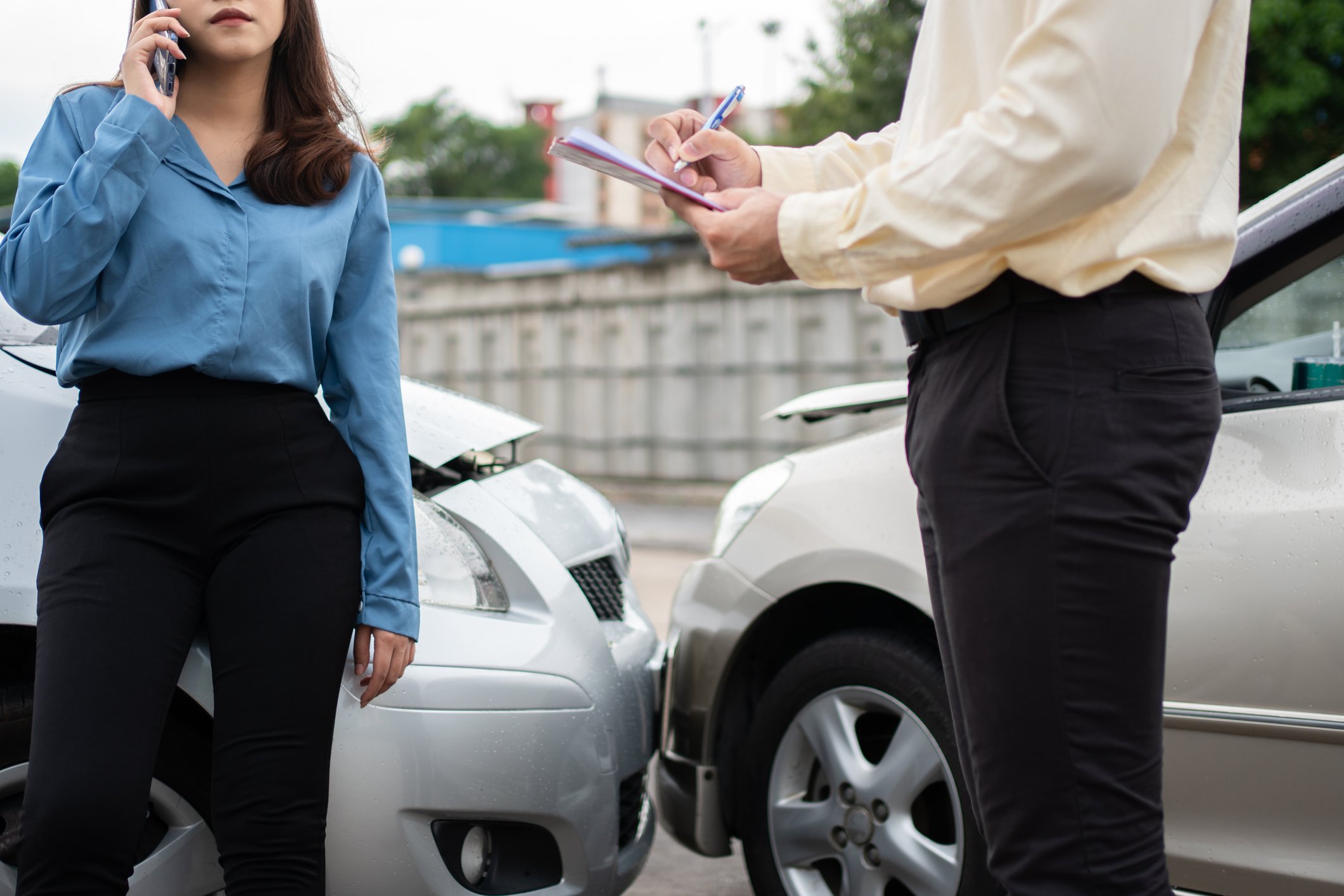
While you might not get a ticket for having your interior lights on, that doesn’t mean it won’t cost you. If you’re involved in an accident at night and your interior lights were on, an insurance company or a court could use that information to argue that you were driving negligently, potentially shifting the financial fault of the crash onto you.

Contributory Negligence

If you are involved in an accident at night and the other driver’s legal team or insurance adjuster discovers your dome light was on, they will likely use it against you. Even if the other driver technically caused the crash, such as by failing to yield, your light can be used as evidence of comparative or contributory negligence. They can argue that you voluntarily compromised your own night vision and reaction time, making you partially responsible for failing to avoid the collision. Depending on your state's laws, being found even 10% to 20% at fault can reduce the payout you receive or even bar you from recovering damages entirely.

Distracted Driving Violations Spike Premiums

If an officer pulls you over because you were fumbling in the cabin with the light on and writes you a ticket for distracted driving or inattentive driving, your insurance rates will almost certainly skyrocket. Insurance companies view distracted driving as a high-risk behavior on par with speeding or tailgating. A single distracted driving conviction can cause your insurance premiums to jump by 21% per year, costing you hundreds of dollars extra over the three to five years the violation remains on your driving record.

Comprehensive and Collision Claim Disputes

If you have a solo accident—such as veering off the road and hitting a guardrail because you were blinded by window glare—your insurance provider will still cover the damage under your collision policy (minus your deductible).

However, a pattern of negligent behavior can lead to increased scrutiny. While they won't deny a standard collision claim simply for a dome light being on, a documented history of distracted or unsafe driving habits gives the insurer justification to categorize you as a high-risk driver, which can eventually lead to the non-renewal of your policy.

Wrapping Up

If a passenger genuinely needs to find or read something, the safest move is always to pull over into a well-lit parking lot or onto the shoulder before turning on the light. If it’s truly an emergency and you must use the light while moving, keep it brief, use a focused map light rather than the main dome light, and turn it off as soon as you finish. 

Your parents may have gotten the legal semantics wrong, but their safety instincts were entirely right: keep the cabin dark, and keep your eyes on the road.

Sources
  1. What States Is It Illegal To Drive With Interior Lights On. [Monsour Law Firm]

    What States Is It Illegal To Drive With Interior Lights On. [Monsour Law Firm]

  2. Passenger Vehicle Occupant Fatalities by Day and Night – A Contrast. [NHTSA]

    Passenger Vehicle Occupant Fatalities by Day and Night – A Contrast. [NHTSA]