You Bought the House; Now Here Comes the Real Cost of Ownership

Author profile picture
Erik J. Martin
Contributing Writer | Personal Finance and Insurance

Erik J. Martin is a Chicagoland-based freelance writer who writes on insurance and finance topics for a variety of publishers, including The Chicago …

Author profile picture
Susan Meyer
Senior Editorial Manager

Susan is a licensed insurance agent and has worked as a writer and editor for over 10 years across a number of industries. She has worked at The Zebr…

Credentials
  • Licensed Insurance Agent — Property and Casualty
Author profile picture
Beth Swanson
Insurance Analyst

Beth joined The Zebra in 2022 as an Associate Content Strategist. A licensed insurance agent, she specializes in creating clear, accessible content t…

Credentials
  • Licensed Insurance Agent — Property and Casualty
  • Associate in Insurance (AINS)
  • Professional Risk Consultant (PRC)
  • Associate in Insurance Services (AIS)

Why Homeownership Costs More Than You Think

Your mortgage loan is secured, the keys are in hand, and you’ve closed on that dream home you’re excited to move into. After clearing all these obstacles, the path ahead looks free and clear. 

But not so fast, eager new homeowner. Are you prepared for the hidden price of ownership that many first-time buyers overlook, especially in the first year? Truth is, there could be a major gap between what you might expect when it comes to future residential bills and what you will actually pay.

For proof, consider a recent Zillow and Thumbtack analysis, which found that homeowners insurance, routine maintenance, and property taxes can set owners back nearly $16,000 annually.[1] And nearly two in three American homeowners surveyed by Unlock admit that owning is more expensive than they expected before they purchased.[2] 

There’s no denying that home-related expenses are rising due to inflation, market pressures, and other factors. But you’re not alone in this struggle, and there are steps you can take to help lower the financial price tag of being a homeowner in 2026 and beyond. 
The Insurance Bill Nobody Budgeted For

Property insurance premiums have jumped 48% in the past five years, surpassing household income growth.[1] This helps explain why there’s a major disconnect between what homeowners thought they’d pay versus the actual bill: $2,692 versus $2,887, respectively, according to research from The Zebra. Three in four homeowners polled said homeowners insurance comprises a significant portion of their housing budget, with nearly half (47%) indicating they would encounter difficulty paying their mortgage if premiums increased.

“To close on a home, you really just need a policy that meets your mortgage lender’s requirements. Yet for a first-time buyer, that’s often where the research stops,” says Beth Swanson, insurance analyst with The Zebra. “If you’ve never filed a claim or owned a home before, it’s easy to underestimate what your coverage actually includes or what it might be missing. But once you’ve settled in, you start to realize there are add-ons worth considering—like sewer backup coverage, service line protection, and similar endorsements that weren’t part of the initial conversation.”

Keep in mind that rate quotes provided before a home closing often don't reflect actual renewal rates, which can increase suddenly with little warning. And in some markets, many homeowners can’t even renew their insurance because insurers are pulling out or refusing to underwrite policies due to costly claims in those areas and other factors.

“Insurance premiums today are often higher than anticipated because risks have increased significantly, from severe weather to rising rebuilding costs,” Janet Ruiz, director of Strategic Communications for the Insurance Information Institute, explains. “Many first-time buyers don’t realize that premiums can increase at renewal because insurers adjust rates to reflect inflation, catastrophe losses, and local regulations.”[3]

 HVAC

The Maintenance Math Nobody Does

A new study by Synchrony reveals that homeowners seriously underestimate the lifetime costs of maintenance and repairs, anticipating they will fork over around $70,000, while the actual costs usually exceed $339,000 (over $7,000 per year).[4]

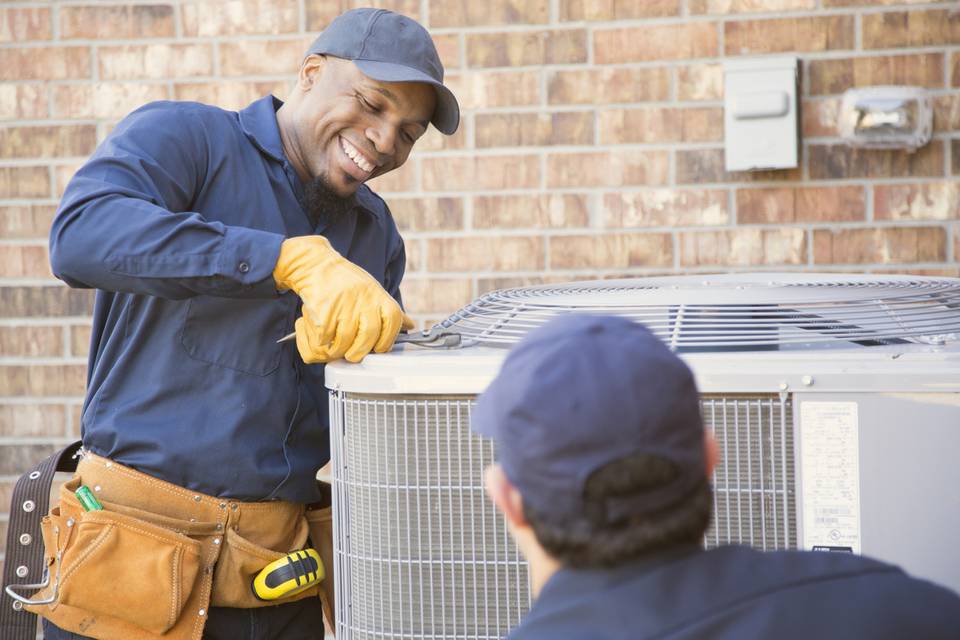
“One thing I’ve learned after years of owning and renovating properties is that homes have a way of needing attention at the worst possible time. An air conditioner stops working during a heat wave, or tree roots find their way into a sewer line,” notes real estate investor and licensed real estate agent Brett Johnson, owner of New Era Home Buyers. “None of these issues are unusual, yet many first-time owners don’t budget for them because they aren’t predictable.”[5]

Property Taxes, Utilities, and HOA Bills That Keep Growing

Property taxes across the country are increasing faster than the rate of inflation, with the typical homeowner paying $4,427 in 2025, a jump of 3.7% from 2024, based on fresh data from ATTOM. The reality is that your home will eventually be reassessed, which could lead to higher-than-expected property bills.[6] 

Just as concerning, residential gas costs and electric rates have each spiked nationwide by about 40% since 2019 and 2021, respectively, per Powerlines data.[7] The U.S. Energy Information Administration expects the trend to continue, projecting residential electricity prices to keep rising through 2027, with the steepest increases hitting East Coast states as utilities pour money into strengthening the power grid against extreme weather and rising demand.[8] New federal survey data backs up what many homeowners already feel in their gut: energy costs that once felt manageable are now forcing hard choices, from skipping other bills to keeping homes at uncomfortably hot or cold temperatures just to make ends meet.[9]

Average Property Taxes Paid by Homeowners in Highest- and Lowest-Taxed U.S. States

And if you live in a homeowners association, you’re almost certainly paying a lot more today than just a few years ago. The Wall Street Journal reported that median monthly HOA fees for single-family residences have shot up 26% since 2019 ($63 a month), compared with 29% ($420 a month) for condo fees.[10]

“The problem is that buyers frequently budget using today’s numbers without considering how these numbers can change over time,” cautions personal finance expert Jeremy Panizzoli, founder of FinQnA.[11] “Property taxes may be reassessed after a home sale. Utility costs can vary significantly depending on weather, household size, home efficiency, and local energy prices. HOA fees may also increase or be supplemented by special assessments that weren’t part of your original calculations.”

The Savings Drain

Buying and owning a home can also seriously deplete emergency funds and diminish those precious dollars you’ve saved away for a rainy day. Per Realtor.com, 14% of recent buyers indicated their most common challenge after closing was a depleted savings account.[12] 

“The fastest way to turn a manageable home purchase into a financial burden is to arrive at closing with little or no cash left over,” Panizzoli continues. “Moving expenses, furniture purchases, utility deposits, basic home improvements, and unexpected repairs frequently arrive within the first few months of ownership. But after purchasing, rebuilding your cash reserves should become a top priority.”

How to Close the Gap

To lessen the financial blow in your first year and beyond, follow these best practices recommended by the experts.

Homeowners insurance

  • Shop around before and at every renewal. It pays to get offers from several different carriers. When you’re ready, consider using an online marketplace like TheZebra.com or working with an independent broker, as these options let you compare rates from multiple providers side by side. 
  • Increase your deductible. “Raising it from $500 to $1,000 can reduce your premium by roughly 10% to 25%,” suggests Ruiz.
  • Qualify for other discounts. Bundling auto and home policies, being a retiree, belonging to a professional association, and long-term loyalty to the same carrier are among the triggers that can yield lower premiums.

Maintenance

  • Follow the 1% rule. Set aside around 1% of your home’s value every year for maintenance and repairs, although older homes or properties with deferred upkeep can easily require more.
  • Review the professional home inspection report. Did the inspector spot any red flags or forthcoming repairs needed?
  • Consider purchasing a home warranty/service contract. This yearly subscription helps pay to fix or replace major household systems and appliances that break down due to normal wear and tear.

Other bills

  • Request past property tax bills from the seller to learn what they paid.
  • Get utility cost estimates from the seller or utility companies before closing.
  • Ask about HOA special assessments and reserve fund health before buying in an HOA.

Savings 

  • Build or replenish an emergency fund. Panizzoli recommends setting aside at least 3 to 6 months of essential expenses in savings. 
  • Set up regular automated transfers into a dedicated savings account to help replenish your reserves.
 electrical inspector

The Takeaway: Budget for the Unexpected

Don’t beat yourself up if the actual costs of ownership far exceed what you envisioned. It’s understandable for first-time buyers to be inexperienced and underinformed. But by thinking ahead and budgeting carefully, you can avoid severe sticker shock later and, hopefully, set aside ample extra funds for the unexpected.


Sources
  1. Hidden costs of homeownership reach $16k per year. Zillow Group, Inc.

    Hidden costs of homeownership reach $16k per year. Zillow Group, Inc.

  2. 65% of U.S. homeowners say owning a home costs more than expected. Unlock

    65% of U.S. homeowners say owning a home costs more than expected. Unlock

  3. Interview with Janet Ruiz. III

    Interview with Janet Ruiz. III

  4. New Synchrony Study Finds Homeowners Underestimate Lifetime Home Maintenance and Repair Costs by More Than $250,000. Synchrony

    New Synchrony Study Finds Homeowners Underestimate Lifetime Home Maintenance and Repair Costs by More Than $250,000. Synchrony

  5. Interview with Brett Johnson. New Era Home Buyers

    Interview with Brett Johnson. New Era Home Buyers

  6. Average Single-Family Home Property Tax Bill Rose 3 Percent in 2025. ATTOM

    Average Single-Family Home Property Tax Bill Rose 3 Percent in 2025. ATTOM

  7. Utility Bills Are Rising. Powerlines

    Utility Bills Are Rising. Powerlines

  8. Short-Term Energy Outlook. U.S. Energy Information Administration

    Short-Term Energy Outlook. U.S. Energy Information Administration

  9. Household Energy Insecurity, 2024. U.S. Energy Information Administration

    Household Energy Insecurity, 2024. U.S. Energy Information Administration

  10. Surging HOA Fees Are Pushing Homeowners to the Brink. WSJ

    Surging HOA Fees Are Pushing Homeowners to the Brink. WSJ

  11. Interview with Jeremy Panizzoli. FinQnA

    Interview with Jeremy Panizzoli. FinQnA

  12. As Market Cools, Buyer Regret Does Too. Realtor.com

    As Market Cools, Buyer Regret Does Too. Realtor.com