

Surviving Catastrophe: Five Lessons from Homeowners After the Claims Process

Author profile picture
Senior Editorial Manager

Susan is a licensed insurance agent and has worked as a writer and editor for over 10 years across a number of industries. She has worked at The Zebr…

Credentials
  • Licensed Insurance Agent — Property and Casualty
Author profile picture
Insurance Analyst

Beth Swanson is The Zebra’s Insurance Analyst and Communications Specialist, covering content, PR, and legislative insurance trends. A licensed insur…

Credentials
  • Licensed Insurance Agent — Property and Casualty
  • Associate in Insurance (AINS)
  • Professional Risk Consultant (PRC)
  • Associate in Insurance Services (AIS)
Author profile picture
Insurance Insights Researcher

Bree Matheson joined The Zebra in 2025, where she conducts research focused on insurance and consumer behavior. She holds a PhD in Technical Communic…

Credentials
  • PhD, Technical Communication, Utah State University
  • 10+ years in professional research
wind_damage

The Disaster Doesn't End When the Wind Dies Down

Many people consider home insurance just a prerequsiste for a home loan. And they hope they will never actually need it. But in a world where natural disasters and their damages are only increasing, a good home insurance policy is a lifeline. 

The Zebra recently talked to a number of homeowners who needed to file significant claims after natural disasters. Across the country, these families discovered the hard realities of property insurance the hard way—and left behind critical playbooks for navigating the aftermath.

Shelby Davis, a homeowner in Tupelo, Mississippi, was home with her family when she heard screaming.

“I saw that there was a huge tree in the home. The roof was gone, windows were busted out, and water was coming in everywhere. I was concerned with all of the broken glass. I was concerned with the tree falling down further, and that was my first thought was to get all kids together and away from the area.”

But once the immediate safety concerns were dealt with, the real storm began: the claims process. Here is what these homeowners learned and the advice they wish they'd been given.

 

1. Audit Your Insurance Before Disaster Strikes

Homeowners often assume their standard policies provide comprehensive protection, and it isn't until after disaster strikes that they realize they have caps in coverage. This was a common thread among our survey participants with many realizing too late they would need to cover some or all damages out of pocket. 

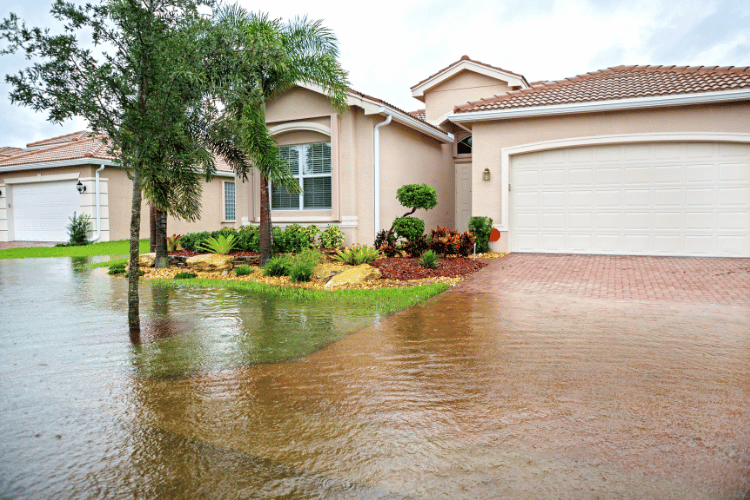
In coastal Florida, Helen Sullivan watched floodwaters drown her home and tear away her lanai. She quickly discovered the wind damage that destroyed the lanai was not covered by her policy which led to significant out-of-pocket expenses. Worse still, getting wind coverage in the future may be out of reach in her area. Parts of coastal Florida where hurricanes are a high risk mean that wind coverage can be either very expensive or not availble at all.

As Helen explains: "The most difficult hurdle was realizing that we did not have an accurate understanding of our insurance coverage, and that when we decided we should increase our coverage so that this doesn't happen in the future, there's really very little options to do that."

Understanding your policy and what it does and does not cover is critically important. Even if the supplemental coverage you want isn't possible, you are at least aware of what expenses you may have in the event of a disaster. 

Tips for Auditing Your Policy

  • Scan your policy for loopholes: Feed your declaration and endorsement pages into an AI tool or hire a public adjuster to flag hidden caps, strict roof depreciation schedules, and exclusion clauses.

  • Separate wind from water: Standard homeowners insurance never covers rising water. Ensure you hold standalone flood insurance, and confirm how your carrier handles the line between storm surge and wind-driven rain.

  • Watch out for "either/or" traps: Insurers routinely claim that mold caused by covered water intrusion is exempt. Know these secondary exclusions before you file.

Surprising Coverage Gap Many Homeowners Don't Know

In a larger survey of 2,500 homeowners, The Zebra found that 35% of homeowners mistakenly believe their standard home insurance policy covers flood or earthquake damage, which actually requires supplemental policies.

2. Physical Prevention Beats Claims Processing

Preventing damage in the first place is the first step to keeping a claim off your record and keeping your family out of a hotel while expensive repairs are underway.

In the intro, you heard from Shelby Davis, whose Missippi home was damaged by a toppelled tree in a storm. Facing displacement and repair delays, Shelby recognized that a check does not undo the trauma of a ruined home.

Instead of switching carriers or adjusting policy limits, she hired a crew to clear every surrounding tree within falling distance of her property. Shelby also adds this advice for homeowners before the storm: "I would tell them to prepare for flood damage, to make sure they had proper sandbags and other, um, flood mitigation strategies. It's just kind of a way of life down there."

Tips for Mitigating Damages

  • Mitigate physical hazards early: If mature trees overhang your roof or drainage systems back up during heavy rain, fix them now.
  • Create a zone of safety: If you live in a fire-prone area, cut back debris in a permeter around the home. Use only hard landscaping (pavers, gravel) by the house. Clean your roof and gutters regularly. 
  • Upgrade your roof: To help survive the next windstorm, consider using wind-resistant shingles and add metal hurricane straps. 

3. Know Your Additional Living Expenses Options

Additional Living Expense (ALE) coverage is also known as "loss of use" and covers the difference in living expenses while your home is uninhabitable after a loss. Of the people, we interviewed, the vast majority (23 out of 26) were displaced from their homes because of the damage. This can be one of the most traumatizing aspects of the event because you don't have the safety and stability of your routine and your home.

Hank Cunninghum, whose Yorba Linda home he had to leave temporarily due to hail and storm damage, describes the discomfort: "You're living out of a hotel. So you're not sleeping the same. It's not your bed. It's not your shower. It's not your house. I mean, every single thing was disrupted."

Several of those we interviewed stayed with family or friends instead of checking their insurance policies for what additional living expenses coverage (ALE) was available. 

Tips for Understanding ALE

  • Don't forget to ask: If you are displaced, review your Loss of Use coverage. Many families rely solely on relatives or accept substandard motels without realizing their policy may cover comparable rentals and living stipends.
  • Covers the difference: ALE is intended to cover the difference in costs above your normal living expenses, not all of our your living expenses. 
  • Know your limits: Coverage is typically capped at a set perentage of your main dwelling coverage and also has time caps for how long coverage can continue. 
Survey on Coverage for Additional Living Expenses After a Significant Damage Incident

The chart above shows the results of a larger survey (beyond the particants in our interviews) who experienced an event significantly damaging their home. The majority did not have to vacate their home during repairs, but of those who did, approximately half had their additional living expenses fully covered by insurance. The remaining percent had a portion of their expenses or none of their expenses covered. 

4. Document Everything and Work with Your Adjuster

The best way to have a smooth claims process is to be extremely prepared. Know your documents, save your records, and make sure the condition of your home before and after the damage is on video. 

Betty Easton, who had winter storm damage in Corinth, Missouri, treated her loss like an active investigation to avoid pushback. "Take lots of photos and videos of the damage right away. Keep every receipt, and stay in regular contact with the insurance company. That makes the claim process much easier." 

Tips for a Smooth Claims Process

  • Build pre-disaster evidence: Take a ten-minute video walk-through of your home today. Open every closet, record appliance labels, and document baseline conditions so carriers cannot claim damage was pre-existing.

  • Keep an exhaustive log: Document the date, time, direct extension, and notes for every single call. Written records create accountability when claims drag on.

  • Lead with transparency: Adjusters handle hundreds of adversarial files a week. Honest, real-time communication can turn an overburdened desk worker into an ally.

5. Calculate the Long-Term Cost Before You File

In the quiet aftermath of routine home issues, some homeowners face an uncomfortable reality: filing isn't always worth it.

As an example, Missouri homeowner Jessica's claim, damage to her attic from a tree limb through the roof, was paid without issues. But after the repairs, her rates skyrocketed. "Honestly, I just felt like I should have just kept the insurance out of it and done my own thing because it might have been cheaper in the long run," she realized. 

Tips for Knowing When to File

  • Treat insurance as catastrophic protection, not maintenance: If a repair won't financially destabilize your household, paying out of pocket often saves money over the five-year rate-hike cycle.

  • Protect against non-renewal: Repeated or small-dollar claims are prime triggers for carriers dropping coverage altogether—especially in volatile coastal and storm-prone markets.

Wrapping Up

Ultimately, rebuilding after a catastrophe is less about luck and more about strategy. Insurance companies are businesses designed to minimize losses, not public charities, and navigating them requires treating your recovery like a professional negotiation.

By cutting down hazards before they fall, cataloging your possessions before they are ruined, and understanding the fine print before the skies turn gray, you become as prepared as you can be. The goal isn't just surviving the weather—it's ensuring that when the dust settles, the financial foundation beneath your feet remains intact.

Methodology

Survey: 

The Zebra partnered with Savanta, an independent agency, to conduct an original survey which is based on online responses from 2,500 US home owners that was conducted in July 2026. The data from 2,500 consumers has been weighted to the most recent Census to ensure it is representative of US consumers who own homes. 

Qualitative Interviews: 

The Zebra used proprietary software to recruit and interview 26 homeowners who had filed a claim due to a natural disaster or severe weather in the last five years. Participants included homeowners from the following states: LA, WI, MS, TX, FL, NE, CA, DE, SC, WA, OH, NY, VA, MO and included damage from the following weather events: hurricane/tropical storm, flood surge, winter storm, hail and thunderstorm, tornado/severe wind. AI agents helped to collect and analyze this data. All participant names have been anonymized.