
Stop Putting Off Home Repairs: Prices Are Only Going Up

How tariffs and inflation are changing the cost of waiting.

Author profile picture
Contributing Writer | Personal Finance and Insurance

Erik J. Martin is a Chicagoland-based freelance writer who writes on insurance and finance topics for a variety of publishers, including The Chicago …

Author profile picture
Insurance Analyst

Beth joined The Zebra in 2022 as an Associate Content Strategist. A licensed insurance agent, she specializes in creating clear, accessible content t…

Credentials
  • Licensed Insurance Agent — Property and Casualty
  • Associate in Insurance (AINS)
  • Professional Risk Consultant (PRC)
  • Associate in Insurance Services (AIS)
Author profile picture
Senior Editorial Manager

Susan is a licensed insurance agent and has worked as a writer and editor for over 10 years across a number of industries. She has worked at The Zebr…

Credentials
  • Licensed Insurance Agent — Property and Casualty
hvac home maintenance

This Autumn is Different

Autumn has arrived, the prime season for watching football, Halloween decorating, and enjoying colorful fall foliage. But it’s also the ideal time to address fix-it matters around your property before Old Man Winter arrives and puts the deep freeze on your home improvement ambitions. This fall brings extra urgency because of a difficult truth for homeowners in 2026: Repair prices are bound to keep rising due to increasing labor and material costs, tariff wars, supply chain pressures, and other reasons.

So if you’ve been putting off servicing that furnace, draft-proofing your double-hung windows and doors, filling in those driveway cracks, or any other overdue project, there’s no better time than the present. Consider that waiting causes 67% of homeowners to pay more for a repair, and the average home needs nearly $3,200 in repairs that still need to be done, per a recent ConsumerAffairs survey.[1]
Why Waiting Is Getting More Expensive

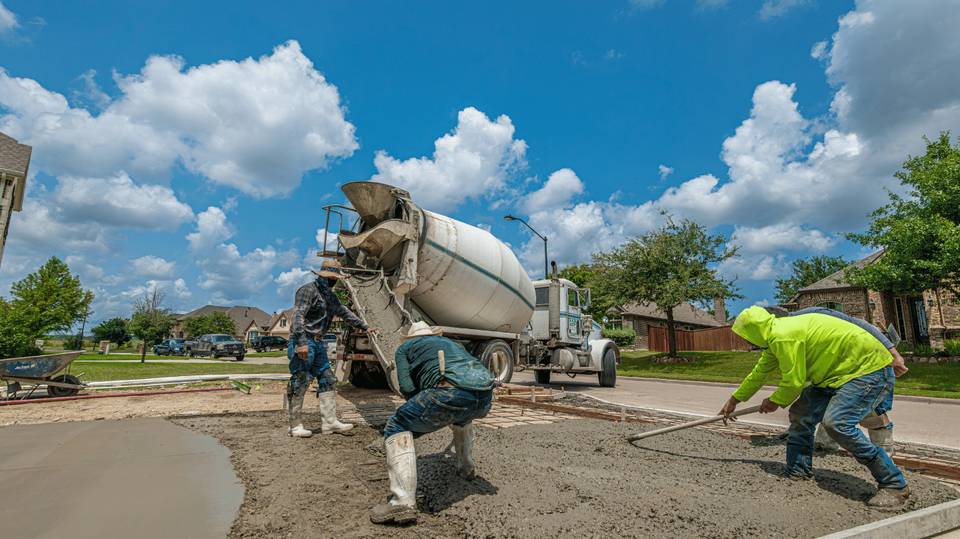
The fact is, home repairs and improvements have become more costly in recent months for a variety of reasons. One is labor shortages, as nearly 90% of contractors say they are currently challenged to find qualified tradespeople, creating a high demand for quality workers. As a result, wages for specialty trade contractors rose around 5% from May 2025 to April 2026, possibly compounded further by ICE raids since last year.[2],[3]

Tariffs and higher prices for materials are another culprit. Tariffs on aluminum and steel jumped to 50% in 2025, while tariffs of 50% were later imposed on some copper imports; Canadian steel and aluminum are currently subject to 50% tariffs.[4] It’s little surprise that the National Association of Home Builders reported in August that builders saw a median 6.7% increase in material costs over the prior 12 months.[5]

Additionally, “transportation costs are increasing due to gas constantly becoming more expensive, and insurance costs are rising as insurance companies are becoming stricter on customers, including contractors,” Nicholas Riley, owner of Driftwood Builders Roofing, says.[6]

Add in the fact that severe weather events have increased demand for reconstruction and repair services across many areas of the country, notes Janet Ruiz, director of Strategic Communication for the Insurance Information Institute.[7]

“These factors can make delaying maintenance even more costly because relatively small repairs today may become significantly more expensive projects later,” she says.

The Systems That Fail Quietly

With proper maintenance, the key systems and components in your home can enjoy a long lifespan, including your water heater (expected to last 6-12 years), central AC (7-15 years), roof (15-20 years for asphalt shingle roofs), furnace (15-25 years), gutters (20-40 years), and plumbing system (50 years). But lacking needed upkeep, these can be among the quickest to fail and the most pricey to repair or replace.[8]

“HVAC replacement is a huge expense, so it’s a good idea to have a checkup once or twice a year,” suggests Beth Swanson, insurance analyst with The Zebra. 

Pre-emptive replacement can pay off with major systems. Let’s say an autumn HVAC tune-up reveals that your 23-year-old furnace is still running strong. Instead of waiting for it to fail, and considering its age, you may want to replace it now at today’s prices rather than waiting until next year or 2028, when a new furnace bill will likely be much higher.


The Fall Checklist Worth Doing

Before temperatures plummet, make time to mark these items off your to-do list:

  • Inspect your roof. “Look for and repair missing, cracked, lifted, or damaged shingles or tiles, deteriorated flashing, loose fasteners, and signs of previous leaks,” recommends Riley.
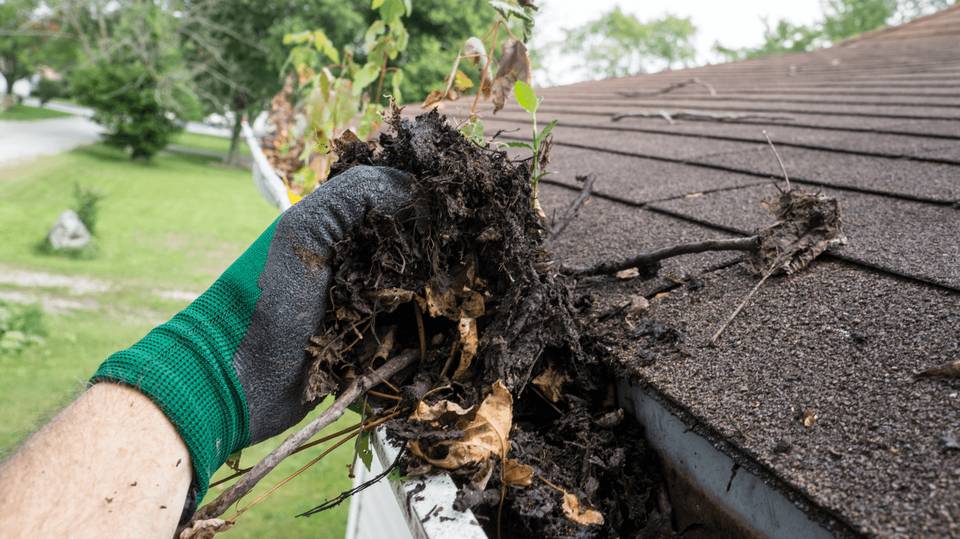
  • Clean gutters and downspouts. Remove leaves and debris to ensure proper drainage away from your home.
  • Inspect your siding, fascia, and soffit. Check for and fix rot, cracks, loose material, or openings where water or pests could infiltrate.
  • Check your attic. Look for and remediate damp insulation, water staining, daylight shining through your roof deck, or proof of poor ventilation.
  • Maintain your chimney. “Get it swept and inspected before you first light up your fireplace to catch creosote buildup or flue damage early,” Swanson advises.
  • Seal exterior openings. Evaluate and improve the weatherstripping, caulking, and sealant around your windows, doors, penetrations, vents, and other exterior joints.
  • Attend to outdoor spigots and irrigation. Drain and disconnect your hoses and spigots before the first freeze to prevent cracked pipes.
  • Flush your water heater. Flush the tank to clear sediment before higher winter usage puts more strain on it.
  • Trim trees and remove debris. “Cut back branches that touch or hang directly over your roof, and remove leaves or organic material collecting in valleys or other drainage areas,” Riley continues.

What Deferring Actually Costs

Remember: Putting off recommended upkeep can cost you more in the long run, and preventive maintenance is almost always more affordable than emergency restoration. 

“One recent real-world example from one of our customers shows how deferred roof maintenance can compound,” explains Riley. “The home had a tile roof where debris had accumulated in a valley. So every time it rained, instead of water flowing off his roof, it got stuck in the valley and started to leak through the underlayment, then into his decking and drywall.”

The final repair bill came to $6,300, which included $1,700 to remove tiles, leaves, and debris from the damaged area, $1,400 to replace damaged roof decking, $1,400 to repair the metal valley and add ice-and-water protection, $300 to secure loose tiles, $200 to clean the valley, and $1,800 to remove and replace damaged drywall. 

“$6,300 could have been saved by simply cleaning off the leaves from his roof,” he adds.

 gutter roof debris

One More Reason to Act

Procrastinating on routine care and servicing may even impact what you pay for homeowners insurance.

“Insurance is designed to protect against sudden and accidental losses rather than damage that results from ongoing neglect. If you fail to maintain your property, your carrier may view certain conditions as preventable maintenance issues rather than covered losses,” says Ruiz. “In some cases, significant deferred maintenance can make it more difficult to obtain or renew coverage because it increases the likelihood of future claims.”

FAQs

What home repairs should I do before winter?

Before winter arrives, prioritize tuning up your furnace and HVAC system, shutting off outdoor faucets and fixtures, sealing drafts around windows and doors, cleaning gutters to prevent ice dams, patching foundation cracks, and testing your smoke and carbon monoxide detectors.

Does deferred maintenance affect my home insurance?

Yes, putting off home maintenance can negatively impact your home insurance coverage because if you need to file a claim, standard policies may reject losses triggered by neglect or normal wear and tear. If an insurance adjuster learns that damage was caused by an unaddressed, long-term issue you ignored, your claim could be denied.

How often should I have my roof inspected?

Aim to have your roof professionally inspected at least once annually, preferably in the fall before cold weather arrives or immediately after a severe storm accompanied by hail or high winds. Regular checkups enable you to spot minor issues like missing shingles or loose flashing before they turn into expensive leaks.

Sources
  1. Holding Off on Home Repairs: Survey of 1,000 Homeowners (2026). ConsumerAffairs

    Holding Off on Home Repairs: Survey of 1,000 Homeowners (2026). ConsumerAffairs

  2. 2026 Workforce Survey Analysis. AGC and NCCR

    2026 Workforce Survey Analysis. AGC and NCCR

  3. Current Employment Statistics. U.S. Bureau of Labor Statistics

    Current Employment Statistics. U.S. Bureau of Labor Statistics

  4. Section 232 Tariffs on Steel and Aluminum. U.S. Congress

    Section 232 Tariffs on Steel and Aluminum. U.S. Congress

  5. Interview with Nicholas Riley. Driftwood Builders Roofing

    Interview with Nicholas Riley. Driftwood Builders Roofing

  6. Interview with Janet Ruiz. III

    Interview with Janet Ruiz. III

  7. Cost of Materials Rises, Especially for Smaller Builders. NAHB

    Cost of Materials Rises, Especially for Smaller Builders. NAHB

  8. InterNACHI's Standard Estimated Life Expectancy Chart for Homes. InterNACHI

    InterNACHI's Standard Estimated Life Expectancy Chart for Homes. InterNACHI