
The Complicated Liability Concerns of E-bikes

What riders, homeowners, and drivers need to know before an accident happens

Author profile picture
Bob Phillips
Personal Finance Writer

Bob Phillips is a personal finance writer whose expertise in insurance and investments has been developed through over fifteen years as an advisor/tr…

Author profile picture
Susan Meyer
Senior Editorial Manager

Susan is a licensed insurance agent and has worked as a writer and editor for over 10 years across a number of industries. She has worked at The Zebr…

Credentials
  • Licensed Insurance Agent — Property and Casualty
Author profile picture
Beth Swanson
Insurance Analyst

Beth joined The Zebra in 2022 as an Associate Content Strategist. A licensed insurance agent, she specializes in creating clear, accessible content t…

Credentials
  • Licensed Insurance Agent — Property and Casualty
  • Associate in Insurance (AINS)
  • Professional Risk Consultant (PRC)
  • Associate in Insurance Services (AIS)
e-bikes

Who Pays When an E-Bike Is Involved in an Accident?

E-bikes have exploded in popularity over the past few years. Commuters use them to skip traffic, delivery riders use them to cover more ground, and families use them for weekend rides that would otherwise be too far to pedal. They're also just a great way for riders of all ages and experience levels to get outside and have fun. About 1.5 million e-bikes were sold in the U.S. in 2025, with the market valued at $2 billion and growing.[1]

But that growth has outpaced the insurance and legal systems built to handle it. When an e-bike is involved in a crash, figuring out whose policy is supposed to cover it is rarely straightforward.
E-bikes Fall Into a Regulatory Gray Area

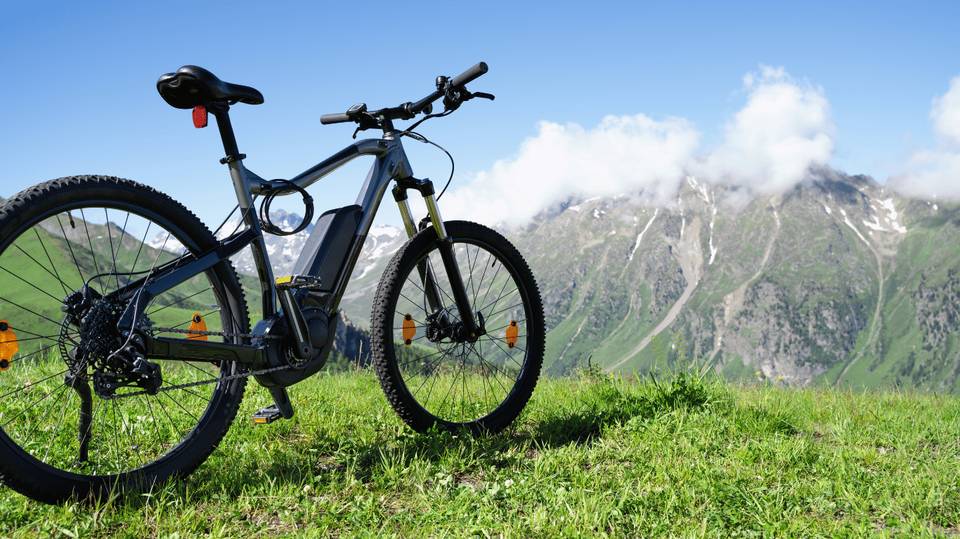
Most states now use a three-tier classification system for e-bikes. Class 1 bikes offer pedal-assist only, up to 20 mph. Class 2 bikes add a throttle but cap out at the same speed. Class 3 bikes can assist up to 28 mph and are often treated more like mopeds.[2]

In more than 40 states, Class 1, 2, and 3 e-bikes are still legally treated as bicycles rather than motor vehicles. That means no license, no registration, and no insurance requirement in the vast majority of cases.

New Jersey is currently the strictest state in the country, requiring all e-bike riders to hold a license, register their bike, and carry insurance on throttle-capable models; a sweeping change that took effect July 19, 2026.[3] Florida passed a similar safety bill unanimously through both chambers, but the governor vetoed it in June 2026. Illinois and Massachusetts have legislation pending that could bring registration and insurance requirements for higher-speed e-bikes. For now, most states still treat compliant Class 1-3 e-bikes as bicycles, but that landscape is shifting.[4] Check your state's DMV for current requirements before you ride.

This patchwork creates a real problem: an e-bike rider can be fully "street legal" in one state and technically uninsured in the eyes of every policy that might otherwise apply.

What's the Difference?

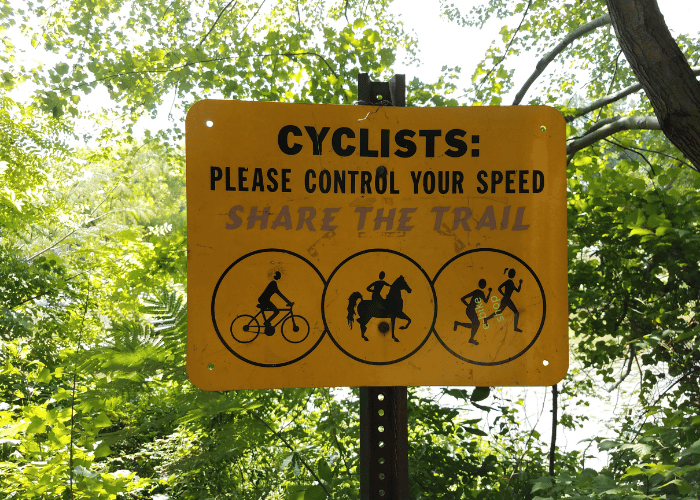
E-bikes are increasingly controversial in mountain biking areas and on shared pedestrian trails, largely because of speed. The three classes break down like this:

  • Class 1: Pedal-assist only, up to 20 mph
  • Class 2: Throttle-equipped, same 20 mph cap
  • Class 3: Assist up to 28 mph, often regulated more like a moped

Auto Insurance Isn't Built For This

If a driver hits an e-bike rider and the driver is at fault, the driver's auto liability coverage is typically the first place to look. That's true whether the rider was on a traditional bike or an e-bike, and it generally covers medical bills, lost wages, and pain and suffering.[5]

Where it gets complicated is on the other side of the equation. Auto insurers generally don't classify e-bikes as motor vehicles, so a driver's policy won't automatically extend coverage to an e-bike the driver personally owns. And if an e-bike rider causes a crash, that rider typically has no auto policy of their own to fall back on, since e-bikes usually aren't insured like cars.

Riders do have some options if they're hit by an underinsured or uninsured driver. Uninsured/underinsured motorist coverage on the rider's own auto policy can sometimes step in to help, even though the rider wasn't driving a car at the time. Some auto policies also include medical payments coverage that applies regardless of fault.[6]

Homeowners and Renters Policies Are a Mixed Bag

Because e-bikes aren't classified as motor vehicles in most states, some homeowners and renters insurers will extend personal liability coverage to accidents an e-bike rider causes. That coverage can help pay for another person's injuries or property damage if the policyholder is found at fault.[5]

The catch is that this isn't guaranteed. Many homeowners and renters policies specifically exclude motorized vehicles, and insurers don't always agree on where an e-bike falls on that spectrum. A Class 1 pedal-assist bike is more likely to be treated like a bicycle than a Class 3 bike with a throttle and a higher top speed.[6]

Theft and physical damage coverage for the e-bike itself can be similarly inconsistent. Some policies cap coverage for bikes at a low dollar amount, which may not come close to replacing a higher-end e-bike. The typical commuter model U.S. e-bike costs between $1,500 and $3,000 for daily use, with entry-level models starting around $700 and premium builds exceeding $5,000.[7]

Riders who want more certainty are increasingly turning to standalone e-bike insurance policies, which function similarly to bicycle insurance but are built around the higher value and higher risk profile of an e-bike.

Fault Gets Complicated Fast

Liability in an e-bike crash depends heavily on the specific facts, and multiple parties can share blame. A driver who fails to yield or turns without checking a bike lane is a common cause of e-bike and driver crashes. A rider who runs a red light, weaves through traffic, or exceeds a safe speed for conditions can also bear some or all of the responsibility.

Many states apply comparative negligence rules to these cases. Under that approach, an injured party's compensation can be reduced by whatever percentage of fault they're assigned. A rider found to be 20% at fault for a crash, for example, might see their payout reduced by that same percentage.

Pedestrian-involved accidents add another layer of complexity. When an e-bike rider strikes a pedestrian, the pedestrian usually has to pursue the rider directly, since e-bikes rarely carry dedicated liability coverage the way cars do. That claim often ends up routed through the rider's homeowners policy (or renters policy) if one applies at all.

Insurers sometimes push back on e-bike claims in ways they wouldn't with a standard bicycle accident. It's not unusual for an insurance company to argue that an e-bike was being operated illegally, exceeded its class's speed limit, or lacked required safety equipment like lights or a speedometer. Any of those arguments can be used to deny or reduce a claim, which makes documentation after a crash especially important.

What Can Riders Do To Protect Themselves?

Given how unevenly e-bikes are covered across policy types, riders are better off checking their coverage before a crash happens rather than after. A quick call to a homeowners, renters, or auto insurer can clarify whether e-bike use is covered, excluded, or somewhere in between.

It's also worth asking specifically about the bike's classification, since insurers may treat a throttle-equipped Class 2 or Class 3 bike differently than a pedal-assist Class 1 model. Riders who commute regularly or own an expensive e-bike may find that a standalone policy offers more reliable protection than trying to stretch a homeowners or auto policy to cover a gap it wasn't designed for.

Final Thoughts

As e-bikes continue to blur the line between bicycle and motor vehicle, insurance products and state laws will likely keep evolving to catch up. Until then, the safest assumption for most riders is that coverage isn't automatic, and it's worth confirming exactly what a policy will and won't pay for before getting on the road.


Sources
  1. U.S. E-Bike Market Size & Share 2026-2035. Global Market Insights

    U.S. E-Bike Market Size & Share 2026-2035. Global Market Insights

  2. E-bike classes explained: Class 1, 2, and 3. sundays

    E-bike classes explained: Class 1, 2, and 3. sundays

  3. News Release: June 23, 2026. New Jersey Motor Vehicle Commission

    News Release: June 23, 2026. New Jersey Motor Vehicle Commission

  4. E-Bike Regulation Is Heating Up. Here’s What Riders Need to Know. Velosurance

    E-Bike Regulation Is Heating Up. Here’s What Riders Need to Know. Velosurance

  5. e-Bike and Bike Insurance: Who Pays When an e-Bike is Involved in an Accident? Sam & Ash Injury Law

    e-Bike and Bike Insurance: Who Pays When an e-Bike is Involved in an Accident? Sam & Ash Injury Law

  6. Who Pays for Damages in an Electric Scooter or E-Bike Crash? Sky Law Group

    Who Pays for Damages in an Electric Scooter or E-Bike Crash? Sky Law Group

  7. Average Price of an Ebike in the U.S. 2026. Latest Cost

    Average Price of an Ebike in the U.S. 2026. Latest Cost