Hit by an Uninsured Driver? What to Know

Author profile picture
Contributing Writer | Personal Finance and Insurance

Erik J. Martin is a Chicagoland-based freelance writer who writes on insurance and finance topics for a variety of publishers, including The Chicago …

Author profile picture
Insurance Analyst

Beth joined The Zebra in 2022 as an Associate Content Strategist. A licensed insurance agent, she specializes in creating clear, accessible content t…

Credentials
  • Licensed Insurance Agent — Property and Casualty
  • Associate in Insurance (AINS)
  • Professional Risk Consultant (PRC)
  • Associate in Insurance Services (AIS)
Author profile picture
Senior Editorial Manager

Susan is a licensed insurance agent and has worked as a writer and editor for over 10 years across a number of industries. She has worked at The Zebr…

Credentials
  • Licensed Insurance Agent — Property and Casualty
uninsured driver crash

Not Every Driver Around You Is Covered

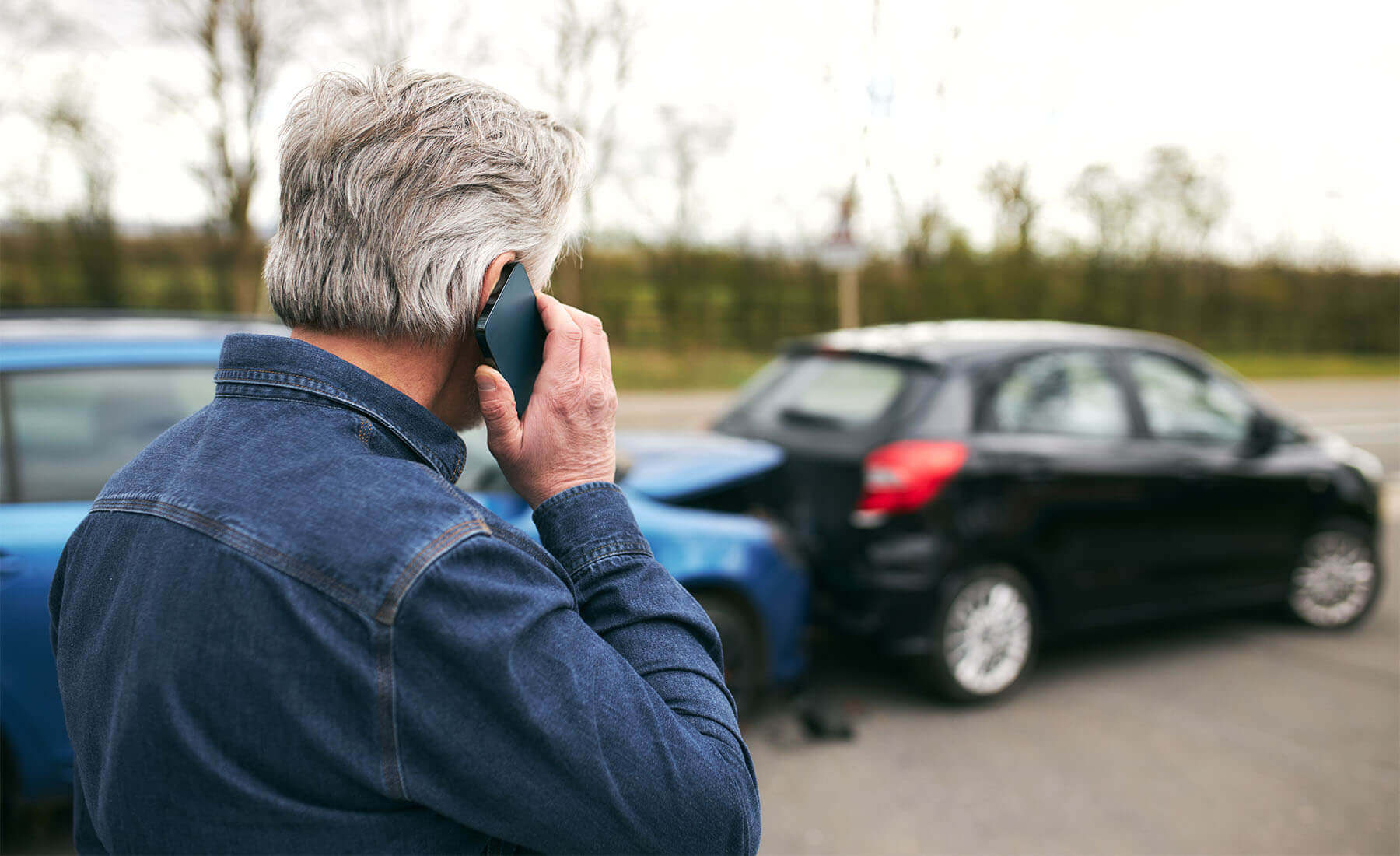
When you get behind the wheel, you feel more secure strapping on your seatbelt and knowing that you have a car insurance policy in place. But what about all those other motorists around you? What happens if one of those drivers damages your vehicle but doesn’t have sufficient insurance protection, or any coverage at all? 

The numbers may surprise you: The Insurance Research Council reveals that 1 in 3 drivers was either uninsured or underinsured in 2023, up 10 percentage points since 2017. And nearly one in five accidents with injuries involved losses that exceeded the at-fault driver’s coverage limits.[1] Unfortunately, most policyholders don’t learn about these risks and deficiencies until an accident occurs and the bills start arriving.

Take the time to understand what’s behind these trends and what you can do to better shield yourself from the other driver’s insurance vulnerabilities. 
What "Underinsured" Actually Means

“An underinsured driver has insurance, but their liability limits are not high enough to cover the full cost of the injuries or damages they cause. An uninsured driver, on the other hand, is someone who does not carry auto liability insurance whatsoever, despite state requirements to do so,” explains Janet Ruiz, director of Strategic Communication for the Insurance Information Institute.[2]

It’s easy to assume that having car insurance means you’re fully covered. But that’s not correct. State minimums are often far below what a serious accident actually costs, and even if the other at-fault driver technically has an auto policy, you can still be financially vulnerable.

Case in point: Let’s say the at-fault driver carries minimum liability coverage, which in your state is $25,000. But if your medical bills and vehicle damage total $55,000, you’re on the hook for the remaining $30,000.

More Drivers Than You Think Aren't Covered

The percentage of motorists lacking proper coverage is a lot higher than many people think, and the numbers have been trending in the wrong direction as premiums continue to rise. Per the Insurance Information Institute, the country’s rate of uninsured drivers has been climbing in recent years: from 11.6% in 2019 up to 15.4% in 2023, with the largest upward trends observed in the District of Columbia, New Jersey, and Missouri. Mississippi has the highest percentage of uninsured drivers in the country at 28.2%, followed by New Mexico (24.1%), the District of Columbia (23.1%), Michigan (22.3%), and Tennessee (21.3%). [3]

“This is actually a very common problem where I practice in Florida, where roughly 20% of drivers are uninsured,” says Stacy Kemp Ferrari, a personal injury attorney.[4]

Making the problem worse, mandatory liability limits in many states remain low. That means even drivers who follow the law often carry inadequate coverage to handle modern medical or repair bills.

As escalating premiums cause more policyholders to maintain bare-minimum protection or drop coverage completely, the rest of us have to pick up the slack in the form of greater financial risks and higher costs to safeguard ourselves against the mounting number of under-protected drivers.

What Your Own Policy Can Do

To better defend yourself against either type of at-fault driver, your car insurance policy should include UM (uninsured motorist) and UIM (underinsured motorist) coverage. The former helps pay for injuries and, in some states, property damage if you are hit by a driver with no insurance, and the latter helps cover your losses when the at-fault driver’s insurance limits are exhausted before all damages have been paid. 

“Most drivers don’t carry enough UM/UIM coverage because they just match it to their liability limits – often the state minimum – without thinking about what accidents actually cost today,” says Beth Swanson, insurance analyst with The Zebra. “Medical costs from crashes have gone up a lot in the last few years, but plenty of people’s coverage hasn’t.” 

Carriers are required to include UM (and frequently UIM) coverage in about 20 states and Washington, D.C., in standard liability policies. Other states, like California, Florida, Pennsylvania, and Texas, mandate that insurers automatically include UM/UIM coverage in initial quotes, although policyholders can opt out via a formal written waiver. In other states, such as Ohio, UM and UIM coverages are optional add-ons that drivers can proactively request.

 insurance app digital

Look closely at your policy, and it might appear a bit confusing. UM and UIM are often bundled into a single coverage line on a policy, although some states allow you to purchase them separately or require different limits for each. You’ll also sometimes see UIMBI/UMBI and UIMPD/UMPD listed on your policy; the “BI” stands for bodily injury, which covers your medical bills and lost wages if you are hit and injured by a driver lacking enough or any insurance; and “PD” stands for property damage, which covers repairs to your vehicle or personal property damaged by an uninsured or underinsured motorist.

Understanding PIP and MedPay

Your policy may also include personal injury protection (PIP), which is required in states like Florida and New York, and medical payments (MedPay), which is required in some states like Maine, but is an optional add-on in states such as Illinois and Ohio. These are no-fault coverages that pay for immediate healthcare costs following an accident, regardless of who’s at fault. 

“In Florida specifically, a no-fault state, we have PIP in place, meaning that regardless of who’s at fault, their own PIP coverage can pay up to $10,000, even if the other driver is uninsured or underinsured,” Ferrari says. “But that adds to the illusion that UIM and UM coverage aren’t needed at all if the state is already protecting them.”

What to Do at the Scene and After

If you’re involved in an accident, especially if the other driver is uninsured or underinsured, follow these steps:

  1. Check for injuries and call 911 if medical attention is needed.
  2. Move both vehicles to safety and out of traffic.
  3. Exchange contact and insurance information with the other driver. Document their plate number immediately in case they try to flee.
  4. Contact the police and ensure they file a report.
  5. Gather evidence. “This includes photos of the vehicles, the accident scene, license plates, and any visible injuries. If there are witnesses, obtain their contact information,” Ruiz advises.
  6. Notify your insurer as soon as possible and provide all documentation.

Avoid accepting a quick settlement from the other driver, skipping a medical evaluation if you think you’ve been injured, and accepting fault before all the facts are reviewed.

How to Make Sure You're Protected Before It Happens

The key takeaway here is that it’s risky to assume you’ll be fully covered if you suffer personal injury or damage to your car or personal property that you didn’t cause.

“To best protect yourself now, before an accident with an uninsured or underinsured motorist, you should review your policy limits and make sure you have adequate UM and UIM coverage,” suggests personal injury attorney John Malm.[5]

Ferrari recommends beefing up your UM/UIM coverage to at least 100/300/100 (meaning up to $100,000 for injuries per person, $300,000 total for injuries per accident, and $100,000 for property damage). Although this could raise your rate, “the peace of mind would be worth it,” she says.

As always, it pays to shop around among different carriers and get rate quotes for policies that include appropriate UM/UIM coverage.

Lastly, keep in mind that you can sue an uninsured/underinsured driver for damages following an accident, “but they may be able to discharge any judgment against them in bankruptcy,” Malm notes.

Frequently Asked Questions

What’s the difference between uninsured and underinsured motorist coverage?

Uninsured motorist (UM) coverage applies when you are hit by a driver who has no auto insurance whatsoever; it pays for your medical bills, vehicle repairs, and lost wages (depending on your policy). Underinsured motorist (UIM) coverage, on the other hand, kicks in when the at-fault driver has insurance but their coverage limits are too low to handle the entire cost of the injuries or property damage they caused; UIM coverage makes up the difference, up to your own policy’s limit.

Can I sue an uninsured driver for damages?

Yes, you are allowed to legally sue an uninsured driver in civil court to pursue a judgment that will pay for your medical bills, automobile damage, and other losses. But in reality, most uninsured drivers lack the savings, income, or personal assets to pay a judgment, so winning a civil suit doesn’t guarantee that you’ll actually collect any money.

Will filing an uninsured motorist claim raise my rates?

Filing an uninsured motorist claim doesn’t necessarily mean your rates will increase, especially if you were not at fault for the accident. But state laws and carrier practices vary. Some states prevent carriers from imposing accident-related surcharges for not-at-fault claims, while others may allow insurers to consider the claim when setting rates or removing particular discounts. Filing multiple claims or disputing fault could also affect how your carrier treats the claim.

Sources
  1. One in Three Drivers are Either Uninsured or Underinsured in the U.S. Insurance Research Council

    One in Three Drivers are Either Uninsured or Underinsured in the U.S. Insurance Research Council

  2. Interview with Janet Ruiz. III

    Interview with Janet Ruiz. III

  3. Interview with Stacy Kemp Ferrari. Kemp Law Group

    Interview with Stacy Kemp Ferrari. Kemp Law Group

  4. Facts + Statistics: Uninsured motorists. III

    Facts + Statistics: Uninsured motorists. III

  5. Interview with John Malm. John J. Malm & Associates Personal Injury

    Interview with John Malm. John J. Malm & Associates Personal Injury