Car Insurance Calculator
Use The Zebra's car insurance calculator to quickly and easily estimate how much your auto insurance could cost in your area. Enter your ZIP code to get started or read more.
Fetching your estimate
Here at The Zebra, we make it easy for you to find the right coverage—at the right price. We compare top companies so you can find what works for you.



We can also help you:
 Why you can trust The Zebra

Drew joined The Zebra as a Senior Content Specialist in 2026, bringing more than a decade of content writing and research experience to help develop …
 Credentials
- Licensed Insurance Agent — Property and Casualty
- SEO Copywriting Certification — SEO Content Institute

Tara joined The Zebra in 2025, bringing 18 years of marketing and public relations experience with fintech and insurance brands. She specializes in c…
Credentials
- 18+ years of experience in the fintech & insurance industries

Beth Swanson is The Zebra’s Insurance Analyst and Communications Specialist, covering content, PR, and legislative insurance trends. A licensed insur…
Credentials
- Licensed Insurance Agent — Property and Casualty
- Associate in Insurance (AINS)
- Professional Risk Consultant (PRC)
- Associate in Insurance Services (AIS)
How to use our car insurance calculator
Our car insurance calculator makes getting an accurate rate estimate simple. All you need to do is select your age group, note whether you are already insured, tell us if you own your home, and then add your ZIP code.
That's all it takes to generate an estimate: no email sign-up and no committment.
Tips for getting an accurate estimate
💡 Provide accurate information - It's crucial to provide accurate information about yourself, your vehicle, and your driving history when you use a calculator or get a formal quote from a comparison tool. Customers are often shocked at how details they perceive as "small" affect their final rate.
💡 Take time to understand your coverage options - Choose the ones that best suit your needs and budget, and don't skimp on coverage to save money up front. We'll discuss coverage more later on.
💡 Take the next step and get a quote - Using our rate calculator is a great way to get a sense of rates in your ZIP code. However, an insurance quote provides more personalized, accurate pricing as it considers more factors.
Updating data...
| Company | Avg. 6 Mo. Premium | Avg. Monthly Premium |
|---|---|---|
| GEICO | $888 | $148 |
| USAA | $1,027 | $171 |
| Progressive | $1,031 | $172 |
| State Farm | $1,504 | $251 |
| Travelers | $1,526 | $254 |
| Farmers | $1,704 | $284 |
| Nationwide | $1,712 | $285 |
| Allstate | $1,811 | $302 |
Source: The Zebra


"Insurance calculators are designed to provide quick, generalized estimates. This is why people often see a discrepancy between a rough estimate and a more detailed quote. Calculators are an excellent starting point, however, they're just not as accurate as a quote from our comparison engine or one finalized by one of our agents."
Dustin Scoggin — Licensed insurance professional at The Zebra
Car insurance calculator examples
See what the results look like for different driver profiles:
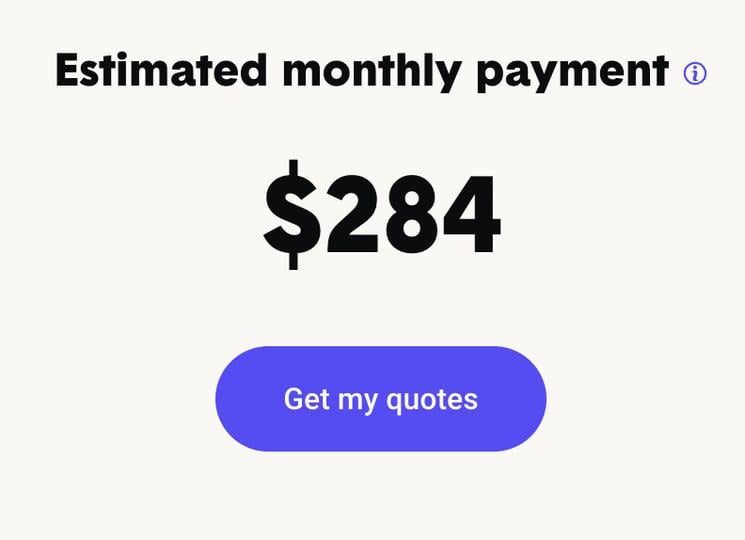
Tina M.
I'm currently insured - Yes
I own my own home - Yes
How old are you - 35-44
What is your ZIP code - 42103
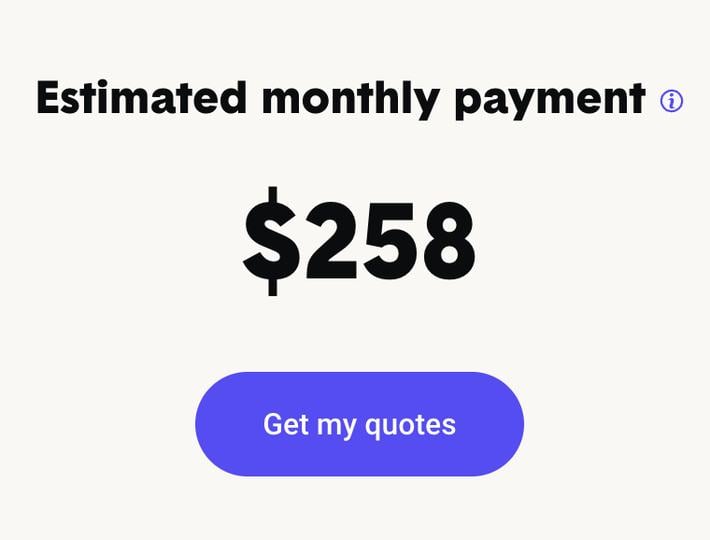
Jim K.
I'm currently insured - No
I own my own home - No
How old are you - 45-54
What is your ZIP code - 11372
Licensed. Knowledgeable. Helpful.
Meet the people behind our advice.

Johnny’s insurance experience began when he joined The Zebra in 2020 as a Customer Experience Agent, supporting the sales team by servicing policies …
Credentials
- Licensed Insurance Agent — Property and Casualty
- 5 years experience in property & casualty insurance

Blake joined The Zebra in 2021 after a 5-year career at GEICO, where he started as a producer selling auto, property, cycle, RV, and boat policies be…
Credentials
- Licensed Insurance Agent - Property and Casualty
- 7+ years insurance experience

Erica began at The Zebra in 2020 as a Licensed Service Agent, bringing six years of insurance experience from her career at Progressive, where she sp…
Credentials
- Licensed Insurance Agent — Property and Casualty
- 10+ years in the insurance industry
Get a personalized car insurance quote
How car insurance premiums are calculated
Car insurance companies consider various factors in a driver's profile to determine rates, some within their control — like a good driving record or driving an affordable car — and some aren't.
Rates are also influenced by location, age, gender, marital status, credit score, vehicle, and driving history. People who fit into higher risk categories, such as teen drivers with an at-fault accidnet on their record, pay higher premium. Conversely, lower risk drivers pay lower premiums. Let's explore these rating factors and their impact on your car insurance premium.

Insurance companies assess applicants by certain demographics to gauge risk and assign appropriate insurance rates:
- Age - Teen drivers tend to pay the highest average insurance rates, around $3,066, of any age group.
- Credit score - People with poor credit scores can pay an average of $229 more per month than someone with excellent credit. Certain states, like California and Michigan, prohibit insurers from using credit scores to determine premiums.
- Marital status - Married drivers tend to pay slightly less per year than single drivers.
- Gender - A driver's gender has minimal impact on thier premium, but men often pay slightly more than women.
Updating data...
Source: The Zebra
Updating data...
Source: The Zebra
- State regulations: Each state sets its own insurance requirements, which can impact pricing. States with higher minimum coverage or PIP requirements often have higher premiums.
- ZIP code pricing: Insurers use your ZIP code to assess risk. Areas with more drivers or higher risks (like theft, vandalism, or natural disasters) tend to have higher rates.
Updating data...
Source: The Zebra
One of the most important risk factors insurance companies assess is your driving history:
- Past tickets, accidents, or violations suggest higher risk and usually lead to more expensive premiums. For instance, a DUI can raise your rates by an average of $1,150.
- Gaps in coverage can raise red flags. Insurers prefer drivers with continuous coverage and higher limits, which signal financial responsibility.
- Sports cars and newer models typically cost more to insure due to repair costs. Rates can also vary based on whether your car is owned, leased, or financed.
Updating data...
Source: The Zebra
More protection means a higher premium — but also more financial security if you need to file a claim.
- Higher coverage limits increase your premium because your insurer is responsible for paying out more in a claim.
- Liability vs. full coverage: Full coverage includes comprehensive and collision insurance, which significantly raises the cost, (about $764 every 6 months on average), compared to a liability-only policy, but will pay for damage to your vehicle regardless of who was at fault for an accident.
- Opting for a higher deductible can lower your premium, but you'll pay more out of pocket if you're in an accident.
Updating data...
Source: The Zebra
Updating data...
| Coverage | Avg. 6 Mo. Premium |
|---|---|
| 50/100/50 BI/PD with $500 Deductible | $993 |
| 100/300/100 BI/PD with $500 Deductible | $964 |
| State Minimum with $500 Deductible | $918 |
| 50/100/50 BI/PD with $1,000 Deductible | $855 |
| 100/300/100 BI/PD with $1,000 Deductible | $829 |
| State Minimum with $1,000 Deductible | $783 |
| State Minimum Liability Only | $266 |
Source: The Zebra
Understanding how much car insurance you need
Determining how much car insurance coverage you need depends on various factors, such as your state's minimum requirements, your vehicle's value, your financial assets, your risk tolerance, and, when applicable, your lender. It's important to consider coverage for liability, collision, comprehensive, uninsured/underinsured motorist, medical payments, and personal injury protection.
🛡️ State minimum: Only includes liability coverage (property damage and bodily injury) and possibly state-specific coverages like PIP or UMBI; liability pays the other driver in the event of an accident and is the lowest (and cheapest) level of coverage available. It does not offer a lot of protection but is legally compliant.
Best for: drivers with vehicles worth less than $4,000
🛡️ Full coverage: Includes liability, comprehensive and collision coverages, as well as any other state-specific required coverages. Comprehensive and colllision each come with a deductible, which you can set (higher deductibles typically mean lower monthly premiums).
Best for: Drivers with financed or leased vehicles or those who prefer high levels of protection.

Liability
At least the state minimum required
Purpose: Covers you if you're at fault for injuries or property damage to others.

Comprehensive
Optional unless financing or leasing a car
Purpose: Damage to your car from non-collision incidents (e.g., theft, vandalism)

Collision
Optional unless financing or leasing a car
Purpose: Damage to your car from collisions with objects or other vehicle

Uninsured/Underinsured
Required in certain states, at least the state minimum
Purpose: Protection if the other driver lacks adequate insurance

Personal Injury Protection (PIP)
Required in certain states, at least the state minimum
Purpose: Covers medical expenses, lost wages, and other related costs, regardless of fault
Medical Payments
Required in NH, PA and ME
Purpose: Covers medical bills for injuries sustained for everyone in the car in an accident
You might not need full coverage (comprehensive and collision coverage) if your vehicle is worth less than $4k, you don't have young or inexperienced drivers driving it, and your car is paid-in-full. Learn more about when you can drop full coverage.
How to save on car insurance premiums
While many rating factors are difficult to change, there are a few steps you can take to make sure you are getting the best rate possible for your situation.
Compare quotes
The best way to save on car insurance premiums is by comparing quotes at each renewal period.
Choose an affordable vehicle
Cars that cost less to buy typically cost less to repair. When repairs are more affordable, insurance premiums tend to follow suit.
Do nothing and lose up to $440 a year on car insurance.
The car insurance industry expects your loyalty and still raises rates. The Zebra puts a stop to overpaying.

Frequently asked questions
About The Zebra
The Zebra is not an insurance company. We publish data-backed, expert-reviewed resources to help consumers make more informed insurance decisions.
- The Zebra’s insurance content is written and reviewed for accuracy by licensed insurance agents.
- The Zebra’s insurance editorial content is not subject to review or alteration by insurance companies or partners.
- The Zebra’s editorial team operates independently of the company’s partnerships and commercialization interests, publishing unbiased information for consumer benefit.
- The auto insurance rates published on The Zebra’s pages are based on a comprehensive analysis of car insurance pricing data, evaluating more than 83 million insurance rates from across the United States.